

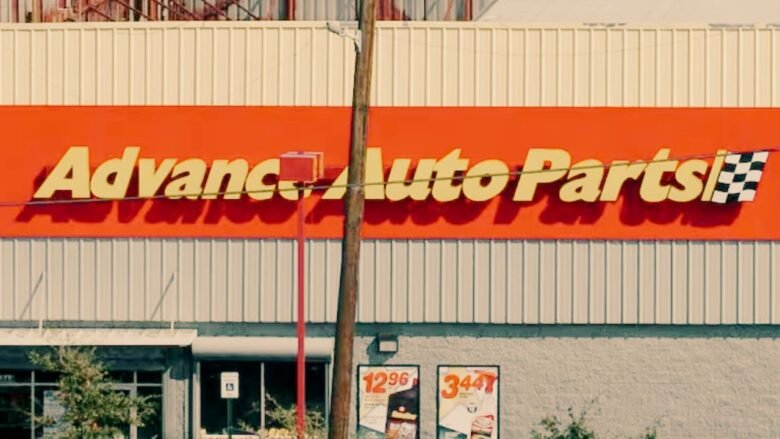
Headlines about 700 store closures made it sound like Advance Auto Parts was collapsing. Social media posts ran with those numbers and turned them into something much bigger than reality. The truth is more straightforward — the company is shrinking on purpose, not shutting down.
This article covers what actually happened: how many stores closed, which regions were hit hardest, why the company made these cuts, and what it means for customers, employees, and investors.
Advance Auto Parts Is Not Going Out of Business
Let’s answer the main question directly. Advance Auto Parts is not going out of business. There has been no bankruptcy filing. The company is not in liquidation. What happened is a planned restructuring — a deliberate decision to cut weak locations and refocus on stronger ones.
As of early 2025, the company still operates roughly 4,000 Advance Auto Parts stores plus 934 independent Carquest locations across the U.S., Canada, Mexico, Puerto Rico, and the Caribbean. That is a large operation by any measure.
The closures — around 700 locations — represent approximately 10 to 15 percent of total locations. That’s a meaningful reduction, but it’s not the whole chain. On top of that, the company has announced plans to open 30 new stores in 2025 and more than 100 new locations by 2027. That’s not what a company in freefall does.
The Scope of the Store Closures
In November 2024, Advance Auto Parts announced a specific plan: close 523 corporate stores, exit 204 independent locations, and shut down 4 distribution centers by mid-2025. Both Advance Auto Parts and Carquest branded stores were included in those numbers.
By early 2025, the company confirmed the mass-closure phase was complete — and it happened ahead of schedule. In total, roughly 727 retail locations were affected, according to reporting by The Autopian, which cited the figure as about 10.6 percent of corporate-owned stores.
One thing worth clarifying: when independent franchise locations lost the Advance Auto branding, that didn’t automatically mean they closed. Many of those stores continue operating as independent retailers — they just no longer carry the Advance name.
Why the Company Made These Cuts
This wasn’t a panic move. It was a response to real financial pressure combined with a longer-term strategy to fix the business.
Advance Auto Parts had been struggling with sluggish consumer demand, weaker-than-expected earnings, and a quarterly loss. The Wall Street Journal reported that the closure announcement came directly after the company posted a quarterly loss and missed its revenue forecast. Something had to change.
The strategy involves pulling out of less profitable markets — especially on the West Coast — and concentrating resources in regions where the company performs better, mainly the eastern U.S. All California stores, roughly 139 locations, are reported to have closed. Oregon and Washington also saw heavy closures.
The company also sold its Worldpac division to Carlyle for approximately $1.5 billion in August 2024. Worldpac was a wholesale auto parts distributor — a different type of business from Advance’s core retail operation. Selling it freed up capital and simplified what the company actually does. Think of it as cutting off a side branch to strengthen the main trunk.
Closing four distribution centers also helps reduce fixed overhead. Fewer hubs, routed more efficiently, lower the cost of moving inventory. That’s standard supply chain logic.
The stated financial target is to improve adjusted operating income margin by roughly 500 basis points by fiscal 2027. Whether they hit that number remains to be seen, but the direction of the restructuring is clear.
What This Means for Customers
If you’re in California or another heavily affected West Coast state, your local Advance Auto Parts has likely already closed. That’s a real inconvenience, and the company isn’t coming back to those markets anytime soon based on current plans.
If you’re in the eastern half of the country, your local store is probably still open. In fact, some markets may eventually gain new “market hub” stores — larger format locations with broader inventory. New openings have been confirmed in states including Ohio, Virginia, Maryland, Illinois, Florida, and Wisconsin.
For customers in affected areas, here are practical options:
- Use the Advance Auto store locator on their website to find the nearest open location.
- Look for independent Carquest stores in your area — many remain open even after the restructuring.
- Consider online retailers like Amazon Automotive, eBay Motors, or CarParts.com for parts you’d normally buy in-store.
The key point: finding your local store closed does not mean the entire chain is gone. Thousands of locations are still operating.
What It Means for Employees and Communities
Store closures mean job losses, and that’s a real cost to the people involved. While Advance Auto Parts has not released a specific total number of jobs cut, closing over 700 locations and four distribution centers represents a significant workforce reduction.
Some employees may be absorbed into nearby stores that remain open or into new locations being built. But for many workers — especially in markets the company is fully exiting — that transition isn’t straightforward.
Communities that lose a local retailer also lose tax revenue, foot traffic, and a convenient resource for car owners. That impact tends to be felt more in smaller towns where Advance Auto may have been one of the few parts options nearby.
This is also part of a broader shift in retail. Specialty brick-and-mortar stores across many categories are consolidating. Online parts sellers have made it easier for customers to skip the store entirely, which puts pressure on chains to cut costs and operate more efficiently.
How Advance Auto Compares to Its Competitors
It’s worth putting this in context. Advance Auto Parts has long trailed its two main competitors — AutoZone and O’Reilly Auto Parts — in profitability and operational efficiency. Both of those companies have been more consistent in their store performance and have not faced the same level of restructuring pressure.
AutoZone and O’Reilly have also been more aggressive about inventory availability, which is one of the key things customers care about when choosing an auto parts store. If the part isn’t in stock, the customer goes elsewhere.
Advance Auto’s restructuring is partly an acknowledgment that it was spread too thin. Competing in too many markets, especially weaker ones, diluted performance across the board. The plan now is to be a smaller but more focused competitor — and to invest in formats like market hubs that can offer better inventory depth in priority locations.
For more business coverage and analysis like this, visit Prime Business Daily.
The Bottom Line
Advance Auto Parts closed roughly 700 stores, sold a major division, and shut down four distribution centers. That’s a big restructuring — but it is a restructuring, not a shutdown.
The company still runs approximately 4,000 stores and nearly 1,000 independent Carquest locations. It’s opening new stores in 2025 and has plans to expand through 2027. No bankruptcy has been filed. The business continues.
If your local store closed, that’s genuinely disruptive and worth acknowledging. But if you’re wondering whether Advance Auto Parts as a company is finished — the answer is no. It’s smaller, more focused, and trying to fix what wasn’t working. Whether that strategy succeeds is a separate question. Right now, the chain is still in business and plans to stay that way.
Also Read: