

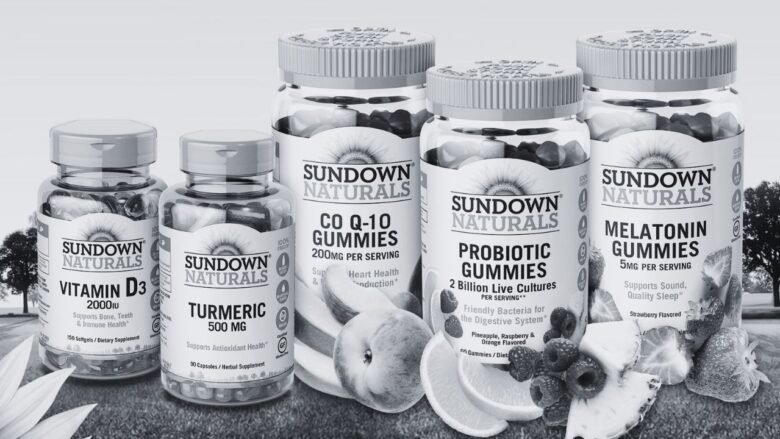
If you’ve been shopping for Sundown vitamins lately and noticed empty shelves, missing products, or heard rumors online, you’re not alone. A lot of loyal customers are asking the same question: is Sundown going out of business?
The short answer is no — at least not based on any public evidence. But there’s a longer story worth understanding, especially if you rely on these products regularly. Here’s what’s actually going on.
Sundown Vitamins Has a Long Corporate History — and It’s Changed Hands More Than Once
Sundown, often sold under the name Sundown Naturals, isn’t a small or fragile brand. It has serious roots in the U.S. supplement industry.
The brand started as part of Rexall Sundown, a Florida-based vitamin manufacturer. For a time, Rexall Sundown was owned by Royal Numico, a Dutch nutrition company. In 2003, Numico sold Rexall Sundown to NBTY for $250 million in cash.
NBTY wasn’t a small buyer. They were already behind major supplement names like Nature’s Bounty, Vitamin World, and Puritan’s Pride. Bringing in Sundown made their portfolio even larger.
That acquisition folded Sundown into one of the biggest supplement operations in the country. So from early on, this was never a niche brand operating on thin margins.
Who Owns Sundown Now
After NBTY, the parent company went through several name changes. It became The Nature’s Bounty Co., then later The Bountiful Company. The corporate identity kept shifting, but the brands underneath stayed largely intact.
The most recent major change: Nestlé Health Science completed its acquisition of The Bountiful Company’s core brands, including Nature’s Bounty. Sundown, as part of that broader brand portfolio, now falls under the Nestlé Health Science umbrella.
To put that in perspective — Nestlé Health Science is a division of one of the largest food and nutrition companies in the world. This is not a company on the edge of collapse. When a brand is sitting inside a company that size, “going out of business” is a very different conversation than it would be for a startup or a small regional label.
No Formal Closure Has Been Announced
Let’s be direct here. There is no public bankruptcy filing, no official press release, and no credible announcement stating that Sundown is shutting down.
What has been reported is a WARN notice filed by Nestlé Health Science for layoffs at a facility in Holbrook, New York — 31 of 69 employees, with “economic” reasons cited. That’s a meaningful workforce reduction at one location, and it understandably got people’s attention.
But a WARN notice is not a brand closure. It’s a legal requirement to notify employees before layoffs. Companies file these regularly during restructuring, consolidation, and cost-cutting — none of which automatically means a product line is disappearing.
It’s also worth looking back at history here. When NBTY acquired Rexall Sundown in 2003, it cut around 200 jobs almost immediately at the Boca Raton facility. That sounds dramatic — and it was significant for those employees — but the Sundown brand kept going. The layoffs were part of integrating a new acquisition, not dismantling it.
The same logic applies today. Workforce reductions during post-acquisition integration are standard business practice. They don’t equal brand liquidation.
Why Sundown Products May Be Harder to Find in Stores
This is where most of the confusion seems to start. A shopper walks into their usual supermarket, heads to the vitamin aisle, and can’t find the Sundown product they’ve been buying for years. They assume the brand is gone.
But here’s the thing: retail shelf space is controlled by the retailer, not the brand. A store can drop a supplier, reduce how many SKUs they carry, or reorganize their supplement section entirely — and it has nothing to do with whether that brand still exists.
Large conglomerates like Nestlé Health Science also manage multiple brands at once. They may focus their marketing budget on flagship names like Nature’s Bounty while Sundown gets less promotional support. That can make Sundown feel like it’s fading, even when it’s still actively being sold elsewhere.
A few realistic scenarios worth understanding:
- A shopper can’t find Sundown Vitamin D at their local supermarket. That store may have renegotiated its vendor contracts or shifted shelf space to a private label or competing product. But that same Sundown Vitamin D is likely still available on Amazon or at a national drugstore chain — which confirms the brand is still active, just less visible in that one location.
- A specific Sundown multivitamin is listed as “discontinued” on a retailer’s website. That usually means the product variant was dropped — maybe it had low sales or was reformulated — not that the entire brand is shutting down. Brands retire individual SKUs all the time as part of normal product management.
The distinction between a product being discontinued and a brand going dark matters. One is routine business. The other is a major public event that would generate news coverage and official statements.
How to Check for Yourself
If you want to verify Sundown’s current status, here are a few practical steps:
- Search major retailers. Check drugstores, mass merchants, grocery chains, and online marketplaces. If Sundown products show up as available for purchase, the brand is still operating.
- Check the Nestlé Health Science website or any current Sundown brand page for official announcements or product listings.
- Look for recent press releases. A genuine brand shutdown would generate media coverage and official corporate communication. If you can’t find any, that’s meaningful information.
- Distinguish “out of stock” from “discontinued.” Retailer websites usually flag these differently. Out of stock means temporary. Discontinued means that specific product isn’t coming back — but it doesn’t mean the whole brand is gone.
For business context and ongoing coverage of corporate developments like this, Prime Business Daily covers the kind of ownership shifts, restructuring news, and market changes that affect consumer brands across industries.
What This Means for Consumers Practically
If you rely on a specific Sundown supplement, here’s what makes sense right now:
Don’t panic-buy. There’s no evidence of an imminent shutdown that would require you to stockpile. Buying more than you need based on a rumor usually just wastes money.
If a product disappears, compare alternatives. Look at sister brands like Nature’s Bounty — they’re under the same corporate umbrella and often offer similar formulations. Compare the ingredient labels and dosages before switching.
Talk to your healthcare provider before making changes. If you’re managing a specific health condition with a supplement regimen, any switch — even to a product with the same listed ingredient — is worth checking with a professional first.
Watch for reformulations, not just discontinuations. Large companies sometimes replace older product versions with updated formulas rather than just pulling products. If a Sundown item vanishes, look for a newer or updated version before assuming it’s gone for good.
The Bigger Picture: This Industry Consolidates Constantly
The vitamins and supplements space has been consolidating for decades. Brands change ownership. Manufacturing facilities get consolidated. Marketing budgets shift. What looked like five separate companies ten years ago might be two today.
That’s not a sign of industry collapse — it’s standard business evolution. What matters for consumers is whether the products they rely on are still available and still meet quality standards. Large acquirers like Nestlé Health Science operate under strict regulatory requirements and have strong incentives to maintain quality on profitable brands.
Rumors about brands “going out of business” usually start with reduced local availability, an older news article about layoffs, or a discontinued SKU noticed by a regular shopper. These things spread quickly online and take on a life of their own — often well ahead of any actual evidence.
The Bottom Line
Based on what’s publicly available, Sundown vitamins is not going out of business. The brand is part of a massive global nutrition company, no closure has been announced, and the products remain available through multiple retailers.
The layoffs at the Holbrook facility are real, and they matter for the people affected. But workforce reductions during corporate restructuring are not the same as a brand shutdown — and history shows that Sundown has survived much larger disruptions before.
If your favorite Sundown product is harder to find right now, the most likely explanation is a retailer-level decision or a SKU consolidation — not a brand collapse. Stay practical, check current availability directly, and rely on official announcements rather than forum speculation.