

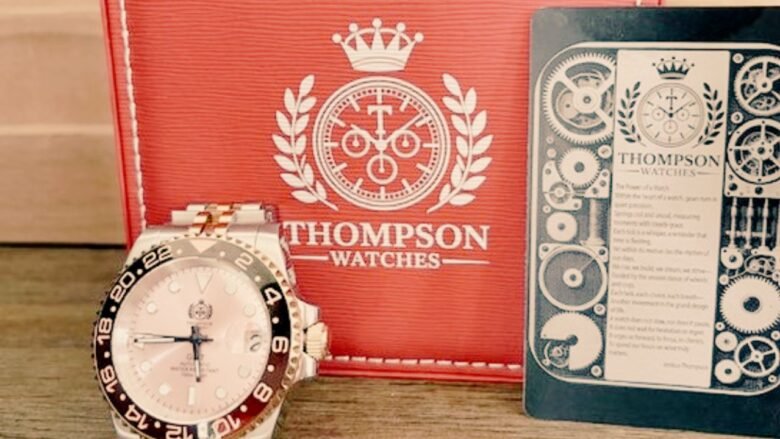
You probably landed here after seeing an ad for Thompson Watches offering something like 80% off a “Closure Sale.” Before you hand over your card details, it’s worth taking a few minutes to understand what that sale actually means — and what other buyers have already found out the hard way.
This article covers whether the closure sale is real, what independent reviewers and security researchers have found about the brand, what customers have reported after ordering, and what to do if you’ve already placed an order.
What the “Closure Sale” on Thompson Watches Actually Means
Thompson Watches runs a dedicated “Closure Sale” page on its website. The language is emotional — think “final collection,” “end of an era,” and heavily discounted prices framed as a last chance to buy.
Here’s the problem: there is no verified corporate filing, bankruptcy record, or independent news report confirming that Thompson Watches is actually shutting down. No announced closure date. No named legal entity winding up operations. Nothing you’d expect from a real business going through a documented shutdown.
What makes this more suspicious is that the “closure” framing appears to be ongoing. It isn’t a one-time, dated announcement. That pattern — a permanently running “closing soon” sale — is a well-known high-pressure sales tactic, not a sign of a genuine business wind-down.
Compare that to what a real retail closure looks like. A legitimate business going out of operation will typically announce a specific end date, name a legal entity, and genuinely liquidate existing stock. When a store has “Final Days!” banners up for months without ever actually closing, that’s a red flag, not a deal.
The official site lists a support email but no physical address, phone number, or registered business details. That alone makes it difficult to treat any “closure” claim as credible.
Is Thompson Watches a Legitimate Watch Brand?
Thompson Watches presents itself as a heritage brand — handcrafted luxury watches, a founder with a story, artisan imagery, and a sense of generational craft. It looks convincing at first glance.
But multiple watchdog and security sites tell a different story. MalwareTips explicitly states that Thompson Watches is not a legitimate watch brand and describes it as a deceptive dropshipping operation. Malware Guide calls the site fraudulent and deceptive. These aren’t casual opinions — they point to specific red flags that are consistent across independent sources.
The “founder” behind the brand? Security researchers say the imagery is likely AI-generated or stock photography. No verifiable individual has been traced behind the company. There is no registered business, no public company history, and no evidence of a real watchmaking operation anywhere.
The on-site reviews also appear to be fake or unverified. They’re there to build trust, not to reflect genuine customer experiences. YouTube reviewers who investigated the brand independently confirmed there is no real workshop or verifiable heritage story behind Thompson Watches.
Where the Watches Actually Come From
This is where the picture becomes clearest. Multiple independent YouTube reviewers found that Thompson Watches appears to source generic, mass-produced watches from suppliers like AliExpress or DHgate. The same or very similar products are available on those platforms for roughly $15 to $25.
Those watches are then resold under a fabricated luxury narrative at significantly higher prices — even after the stated discount is applied. The “80% off” figure is most likely calculated against an inflated, fictional retail price, not a genuine MSRP. So the discount isn’t as meaningful as it looks.
The materials, movements, and build quality are consistent with budget fashion watches. Generic quartz movements, basic casings, and standard finishing — none of it matches the handcrafted luxury story the brand tells.
There is one nuance worth mentioning. A couple of reviewers noted that if you go in knowing you’re buying a cheap fashion watch and you adjust your expectations accordingly, the product might still show up and might be wearable. But that’s a very different thing from what Thompson Watches actually advertises. You’d be paying for a story that isn’t true.
What Customers Have Reported After Ordering
Customer experiences after ordering tend to fall into two groups. The first group received a watch, but found the quality well below what was advertised — basic materials, nothing close to luxury craftsmanship. The second group dealt with long delays, non-delivery, or customer support that was slow or completely unresponsive.
Trustpilot reviews for Thompson Watches include complaints about poor build quality, delivery problems, and difficulty getting refunds. These aren’t isolated gripes — the pattern is consistent enough to take seriously.
The practical problem is this: Thompson Watches has no phone number, no physical address, and no clear legal entity. If something goes wrong with your order, your options for resolving it are very limited. You can’t call anyone. You can’t show up somewhere. You’re left with an email address and hope.
If the site were to shut down or migrate to a new domain — which is something scam-linked operations sometimes do when complaints pile up — any recent buyers would have almost no recourse at all.
What to Do If You Already Ordered
If you’ve already placed an order and you’re concerned, here are the practical steps recommended by consumer protection and security sources:
- Contact your bank or PayPal immediately. Ask about initiating a chargeback or dispute. Do this as soon as possible — there are time limits on disputes.
- Save all documentation. Keep your order confirmation, any emails, screenshots of the website, and payment records. You’ll need these if you file a dispute.
- Report the site. In the US, you can report to the FTC at reportfraud.ftc.gov. In the UK, Action Fraud handles these reports. Other countries have equivalent agencies.
- Monitor your payment method. If you entered card details on a site you’re now unsure about, watch your statements carefully for any unauthorized charges.
There’s no guarantee you’ll get your money back, but acting quickly gives you the best chance.
How to Spot This Pattern in Other Brands
Thompson Watches isn’t unique. The playbook it appears to follow is used by many online stores operating in a similar way. Knowing the warning signs helps you avoid the same situation elsewhere.
Watch for these red flags when shopping online:
- Discounts of 70–90% off with no clear explanation of the original retail price
- Emotional “going out of business” or “founder is retiring” stories with no verifiable details
- No physical address, phone number, or named company behind the site
- Founder or artisan imagery that looks AI-generated or too polished to be real
- On-site reviews that all sound the same or can’t be verified elsewhere
- Closure sales that have no announced end date
When multiple red flags appear together, that’s a clear signal to stop and search independently before buying. A quick search of the brand name plus “scam” or “review” often surfaces what you need to know within minutes.
For more coverage of business practices worth knowing about before you spend, Prime Business Daily covers these topics regularly.
The Bottom Line on Thompson Watches
The “closure sale” at Thompson Watches does not appear to reflect a real, documented business shutdown. There is no corporate filing, no official announcement, and no independent verification that the company is genuinely winding down. The closure framing looks like a sustained marketing tactic designed to push urgent purchases.
The brand itself has been labeled fraudulent or deceptive by multiple independent security and watchdog sources. The watches appear to be generic, mass-produced products sourced cheaply from overseas suppliers, then resold under a fabricated heritage story at prices that are misleadingly framed as discounted luxury.
Some buyers do receive a product. But what arrives is unlikely to match what was advertised. And if anything goes wrong — delays, quality issues, non-delivery — there’s very little infrastructure in place to help you fix it.
If you like the look of a particular watch style, you’re better served by buying directly from a transparent retailer or a budget watch brand that’s honest about what it sells. At least then you know exactly what you’re getting and who to contact if something goes wrong.
Also Read: