

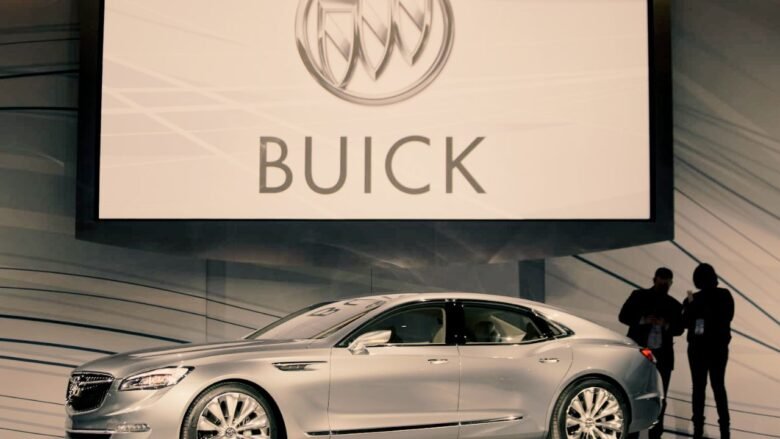
Headlines keep calling Buick a dying brand. Nearly half of its U.S. dealers have closed in recent years. And if you search online, you’ll find no shortage of YouTube videos and opinion pieces declaring the brand is on a “death march.”
But is Buick actually going out of business? The short answer is no — at least not officially. The longer answer requires separating what’s real from what’s just perception.
This article covers what’s actually happening with Buick: the dealer closures, GM’s electric vehicle plans, how sales actually look, and what any of this means if you’re thinking about buying a Buick or already own one.
Buick Is Not Being Discontinued — But It Is Being Restructured
Let’s be direct: General Motors has not announced that Buick is being shut down. There’s no filing, no official statement, and no credible report confirming that the brand is being discontinued.
GM executives have publicly included Buick in their long-term electrification plans. The brand has a stated future — it just looks different from what it was ten years ago.
This is a meaningfully different situation from what happened to Pontiac or Oldsmobile. Both of those brands had formal discontinuation announcements. GM made it clear those nameplates were done. No such announcement has been made about Buick.
What’s actually happening is a restructuring — fewer dealers, a narrower product lineup, and a shift toward electric vehicles. That can look like a brand dying from the outside, especially when your local dealership shuts down. But restructuring and discontinuation are not the same thing.
Why Nearly Half of Buick Dealers Closed
This is probably the biggest reason people think Buick is disappearing. The dealer closures are real, and the scale is significant.
According to Kelley Blue Book, GM ended 2023 with roughly 1,000 Buick stores in the U.S. — down about 47% from the start of that year. That’s a steep drop by any measure.
But here’s the key detail: GM did not force these closures as part of a wind-down strategy. Instead, GM offered buyout packages to dealers who didn’t want to invest in electric vehicle infrastructure. According to WardsAuto, that investment threshold was around $300,000 per store — covering EV tooling, charging equipment, and staff training.
Dealers made a business decision. Many, particularly smaller or rural locations, looked at that cost and decided to take the buyout instead. That’s a rational call for a small business owner. It doesn’t mean the brand is collapsing.
Think of it like a retail chain closing underperforming or unwilling locations before a major format change. The stores close, but the company continues. The problem is that fewer physical locations make a brand less visible to everyday consumers — and that fuels the perception that it’s disappearing.
If your local Buick dealer closed, that’s a real inconvenience. But it doesn’t mean Buick vehicles are going away or that service and parts support has ended. Remaining dealers and GM-affiliated service centers can still handle warranty work and repairs.
GM’s Plan to Make Buick an All-Electric Brand
GM has stated publicly that Buick is targeted to go all-electric in North America by the end of this decade. Future EVs are expected to carry the “Electra” nameplate — a name that’s already been used on Buick models sold in China.
That naming decision has added to the confusion. When people hear “Electra” and not “Buick,” they wonder if Buick itself is being quietly retired. It isn’t — the Electra name sits under the Buick brand, not beside it.
The lineup is also being narrowed. Sedans are already gone from the U.S. market. What’s left are SUVs and crossovers, and that’s what the EV lineup is expected to be built around.
A useful way to think about it: imagine a film camera company making the full switch to digital. The old product range shrinks. Some distributors leave because they don’t want to retool. The company looks smaller and quieter during the transition. But the brand is still there, just in a different form.
That said, there are legitimate questions about execution. As some analysts have pointed out, Buick doesn’t yet have a dedicated EV factory in North America, and its ready-for-production EV models are limited. GM has made the commitment publicly, but delivering on it within the decade is a different challenge. These are real risks worth watching — they just aren’t confirmation that Buick is being shut down.
Buick’s Sales Reality — Weak in the U.S., Stronger Globally
Buick’s U.S. numbers have been soft for years. The brand has an older customer base, a limited model range, and lower brand awareness among younger buyers compared to competitors like Acura or Lincoln.
But the U.S. market isn’t the whole picture. Buick has historically performed much better in China, where the brand carries stronger recognition and a more consistent sales track record. That global footprint is a significant reason GM hasn’t walked away from the name.
If Buick were purely a domestic U.S. brand with these sales numbers, the risk of discontinuation would be much higher. The China market gives GM a reason to keep investing in the brand, even when U.S. performance is underwhelming.
There have been some recent U.S. sales improvements tied to new models and pricing adjustments, but these gains are fragile. One specific risk: some Buick models depend on production in China and South Korea. High import tariffs — which have been discussed and in some cases implemented — could raise costs, disrupt availability, and squeeze margins. Analysts at firms like Barclays have flagged that persistent tariffs could lead automakers to halt imports of hundreds of thousands of vehicles annually from those countries. This is a near-term business risk for Buick, though it’s a scenario, not a confirmed outcome.
How This Compares to GM’s Past Brand Decisions
It’s worth putting Buick’s situation in context. GM has killed brands before. Oldsmobile was discontinued in 2004. Pontiac was shut down in 2010. Saturn ended the same year. When GM decided those brands were done, it said so clearly.
None of those brands had a stated EV future. None were being repositioned for a global market. They were simply cut.
Buick’s current situation — dealer consolidation, model narrowing, EV transition — more closely resembles a strategic repositioning than an exit. That doesn’t mean it will succeed. But the pattern doesn’t match how GM has historically handled brand discontinuations.
What Should Current or Prospective Buick Owners Do?
If you already own a Buick, the practical concern is service access. With fewer dealers, you may need to travel farther for certain work, especially in less populated areas. That’s a real downside, not a rumor.
Parts and warranty support remain in place as long as GM continues to back the brand, which it publicly commits to doing. That commitment can change, but there’s no signal right now that it will.
If you’re considering buying a new Buick, the questions worth asking are practical ones: Is there a dealer within a reasonable distance? Does the model you want fit your needs for the next five to seven years? If the answers are yes, the brand-level uncertainty isn’t an immediate obstacle to ownership.
For business owners or fleet buyers evaluating Buick vehicles, the calculus is similar. The brand has more stability than the headlines suggest, but less certainty than an established EV player would offer. It sits in a middle zone — restructuring in progress, future not fully defined.
For broader context on how legacy businesses handle major market transitions, Prime Business Daily covers these kinds of strategic shifts across industries regularly.
What to Watch Going Forward
If you want to track whether Buick’s situation improves or deteriorates, here are the signals that actually matter:
- GM earnings calls: When executives discuss brand strategy, listen for whether Buick gets specific mention or gets quietly omitted.
- New EV announcements: Product launches and factory investment news tied to Buick are positive signals. Delays and silence are not.
- Dealer network stability: If the roughly 1,000 remaining dealers hold steady, the network has found its floor. Further large-scale exits would be worth noting.
- Tariff and trade developments: Any shifts in U.S. trade policy affecting imports from China and South Korea will directly impact some Buick models.
The Bottom Line
Buick is not going out of business. But it is going through a significant transition that has made it smaller, less visible, and less certain about its future than it was a decade ago.
The dealer closures are real, but they were driven by dealers choosing buyouts over EV investment — not by GM winding the brand down. The EV shift is genuine, but execution remains unproven. The U.S. market is weak, but the global picture is stronger than most headlines acknowledge.
What Buick looks like in 2030 — if it reaches that point as a full EV brand — will depend on whether GM can actually deliver on its stated plans. That’s an open question. But “open question” and “going out of business” are very different things.
Also Read: